PLC Learning Series – Program Cyclic Scan

PLC Learning Series - Program Cyclic Scan

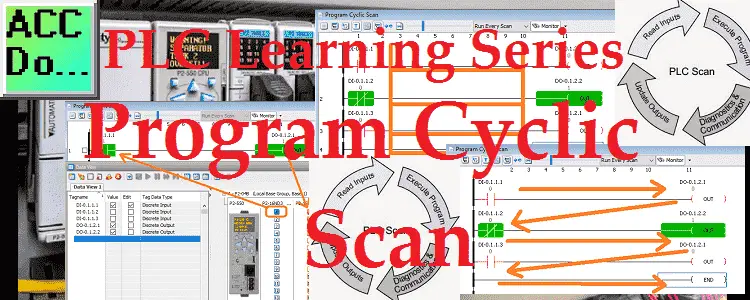
Programmable logic controllers (PLC) use a cyclic scan. The time that it takes to complete one scan is called Scan Time. Typical scan times range from 10 milliseconds to 10 microseconds. This translates from 0.01 to 0.0001 seconds per PLC scan. Understanding how the program scan will help us in programming and troubleshooting the PLC. … Read more

Click PLC Retentive Data Memory Registers

Click PLC Retentive Data Memory Registers

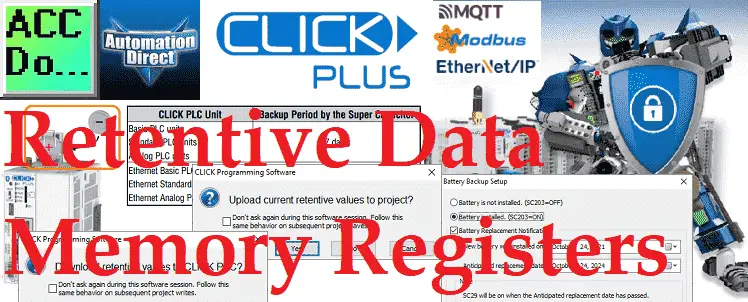
The Click PLC retentive data memory registers are not included in the program file by default. All Click PLC CPUs are included. This option must be selected to include the C, CT, DS, DD, DH, DF, CTD, and TXT memory in the Click project file. We will be enabling the option to include the retentive … Read more

Click PLC – Easy Transfer Line Programming

Click PLC – Easy Transfer Line Programming

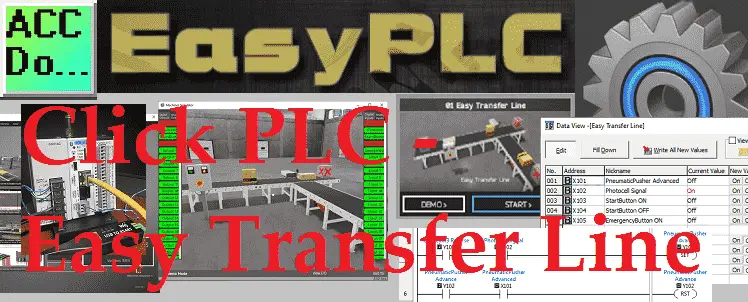
EasyPLC Software Suite is a complete PLC, HMI, and Machine Simulator Software package. This PLC learning package includes a Machine Simulator (MS). This virtual 3D world with real-time graphics and physical properties can communicate to several different programmable logic controllers. (PLC) We will be developing a Click PLC program for a transfer line. This is … Read more

PLC Learning Series – Understanding Numbers

PLC Learning Series - Understanding Number Values

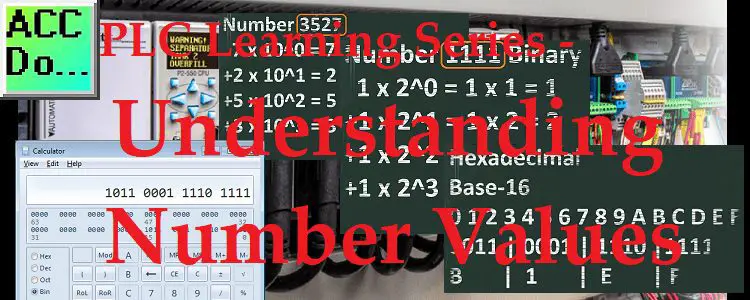
All programmable logic controllers (PLC) have the same numbering system at their core. This is the same with all computers as well. The status of any memory location can be either on or off. A one (1) will represent an on or “True” status and zero (0) will represent an off or “False” status. This … Read more

PLC Learning Series – Memory Backup

PLC Learning Series – Memory Backup

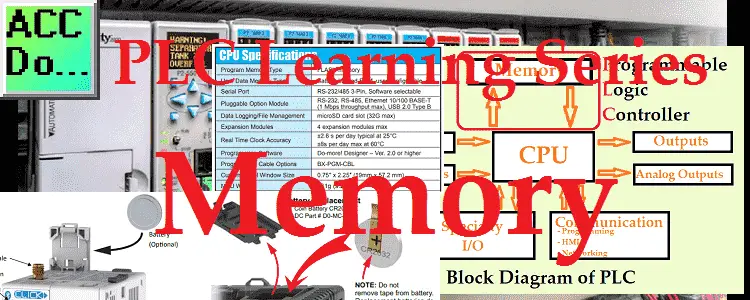
PLC memory is very similar to personal computer memory. There is the operating system and firmware of the processor and connected modules. PLC programs and data that are used by the program are also stored in the memory. We will now look at the basic understanding of memory in the PLC. Looking at two examples … Read more

PLC Learning Series – What are Outputs?

PLC Learning Series - What are Outputs?

PLC outputs are the next component of our PLC block diagram. The PLC program will control the outputs of the PLC. Controlling outputs is one way to get the inputs to change. We will be looking at digital and analog outputs that can be wired to the programmable logic controller. PLC troubleshooting outputs will also … Read more

Transform Your P1000 System: Unlock Remote I/O Power Today!

Productivity 1000 Series PLC P1-RX Remote Slave

You can add a remote PLC slave rack of productivity 1000 series modules using a P1-RX. Up to 4 remote I/O base controllers can be added to the P1000 system. We will update our P1-540 CPU unit to a P1-550 CPU to take advantage of remote IO. A P1-RX remote IO-based controller will be added … Read more

PLC Learning Series – What are Inputs?

PLC Learning Series - What are Inputs?

PLC inputs are one component of our PLC block diagram. The output actions of the PLC will be controlled based on the inputs. We will be looking at digital and analog inputs that can be wired to the programmable logic controller. We will be looking at wiring of a normally open (NO) push button, normally … Read more

PLC Training Series – Tutorial for Everyone

PLC Training Series - Tutorial for Everyone

Invented in 1968 by Dick Morley, the programmable logic controller (PLC) is a simple rugged industrial computer. This free plc training series is designed for everyone to learn about these controllers. PLCs are constantly evolving and continue to be the best option for a variety of industrial automation applications. Even though the PLC is changing, … Read more

Unlock Hidden Do-More Designer Browser Secrets That Save Hours

Do-More Designer Element Browser

The element browser in the Do-More Designer software will display valid memory locations, add documentation, and show how to cast from one memory type to another. We will be discussing the element browser and how to take advantage of this in your Do-More program. Let’s get started.